The Confidence Gap: Fighting Imposter Syndrome & Perfectionism
A room of Brussels communicators sat down to name the voice in their heads. Ninety minutes later, most of them had given it a face and a plan for answering back.
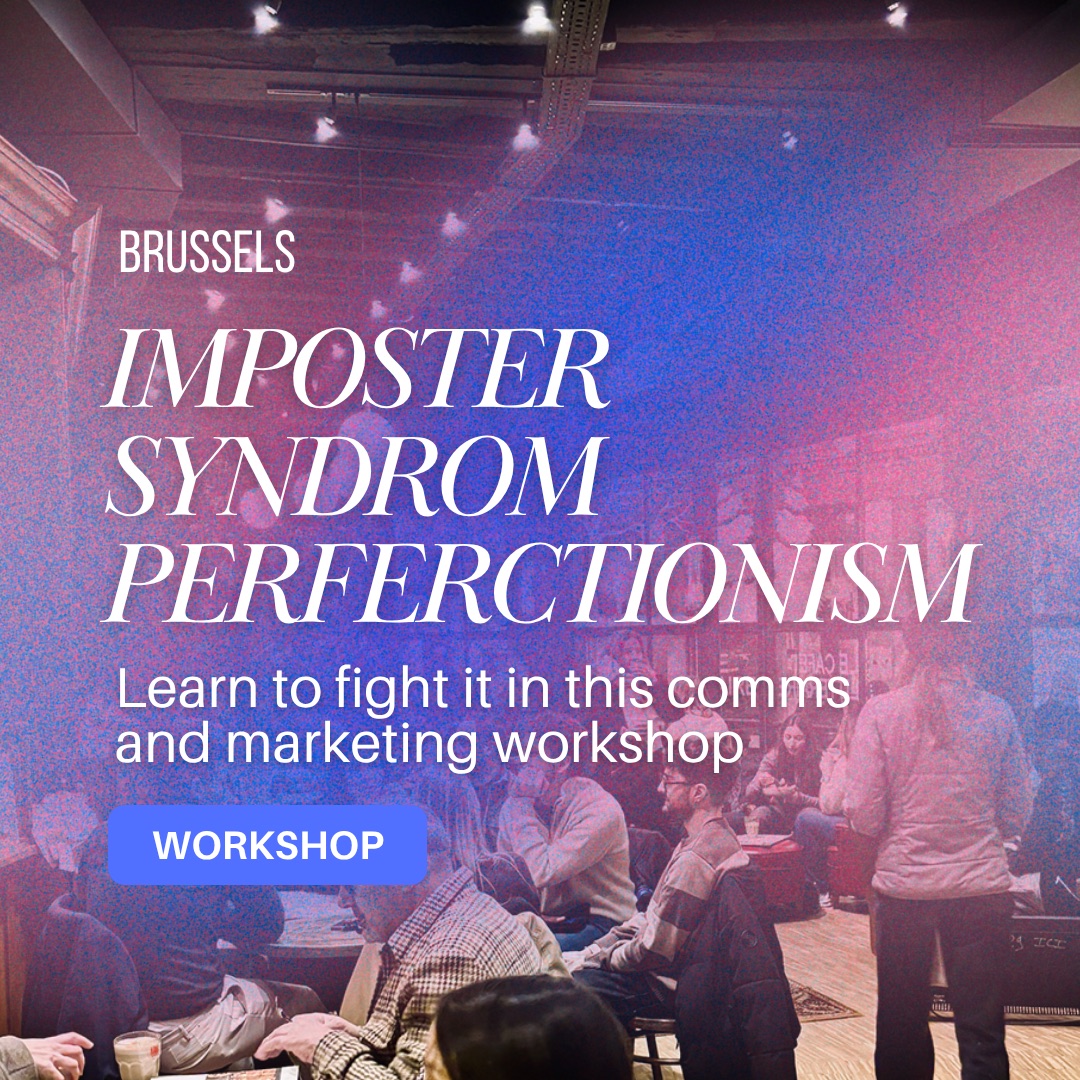
Most professional development sessions about imposter syndrome involve a slide deck, a speaker, and an audience nodding in quiet recognition... But this one was different. The Confidence Gap was a workshop (part theory, part creative exercise, fully participatory) led by Laura Franceschin, a coach who spent years inside the EU bubble before burnout made her stop and listen to herself. She knows what the voice sounds like from the inside.
When she first tried to explain imposter syndrome to her father-in-law, he had genuinely no idea what she was talking about. "I'm not good enough. They made a mistake hiring me. I'm just faking it." Zero recognition. She has since come to see that as a form of luck, and to understand that for most communicators, marketers and advertising professionals in the room, this particular voice needs no introduction.
What happened
What happened
The shape of the session
The 90-minute workshop was built around two core ideas. First: imposter syndrome is much harder to deal with when you're facing it alone. The negative loop - doubt, spiral, more doubt - becomes self-reinforcing precisely because it thrives in isolation. Second: naming the thing gives you leverage over it. Once you can identify the voice as separate from yourself, you can start to challenge it, talk back to it, and eventually prove it wrong. The session moved between theory and practice in a small group format (big enough to bring diverse perspectives, small enough to stay real). Participants shared personal experiences, worked through creative exercises, and helped each other find new angles on familiar patterns. The mix of professional backgrounds in the room - communications, marketing, advertising, across agencies, brands and institutions - meant the conversation surfaced shared frustrations alongside genuinely different ways of relating to the same problem.
The creative exercise
One moment in particular stood out: participants were asked to draw their inner imposter, to give it a physical form. Most people walked in assuming they weren't particularly visual thinkers. Most walked out surprised by what they'd produced, and by what it revealed. Externalising the critic, even clumsily, turned out to matter more than drawing well.
Unexpected connections
The mix of professional backgrounds in the room - communications, marketing, advertising, across agencies, brands and institutions - meant the conversation surfaced shared frustrations alongside genuinely different ways of relating to the same problem.
Key insights
What we learned
The voice is not telling the truth, and it knows it
The inner critic is not a reliable narrator. It's a frightened part of you running an old protection script. Learning to identify it, address it directly, and reassure it changes its hold over you.
You are not the only one
Every person in the room had a version of the same story. That's not a small thing. Isolation is part of what makes imposter syndrome stick - shared recognition is part of what loosens its grip.
Everyone is more creative than they think
The drawing exercise was the proof. Give people permission to be surprised by themselves and they usually are.
Small steps compound
The goal isn't to silence the critic permanently. It's to take the next small step anyway. Keep goals manageable, keep moving, and the mountain shrinks.
Keep the receipts
Write down every piece of positive feedback you receive: a kind word, a note after a presentation, a compliment from a client. Not to be sentimental, but to have evidence: on the hard days, that list is the counterargument!
About the facilitator
Laura Franceschin, professional coach at In Your Groove, spent years working in communications and advocacy in the EU bubble before training as a life coach.
“I know firsthand what it feels like to be good at your job while quietly wondering if you're good enough. The imposter voice. The endless revision. The burnout that finally made me stop and listen to myself.
That experience is what led me to train as a life coach, and it's exactly why I work with so many professionals in Brussels. I've been in the rooms you're in. I'm not here to tell you to think more positively. I'm here to help you see yourself more accurately.”
Venue
Why Kawa Club works for this
Kawa Club sits inside Galerie Bortier, one of Brussels' oldest covered galleries, a few steps from the Grand Place. A café and co-working space with an unhurried atmosphere - the kind of place that makes a 90-minute workshop on self-doubt feel less like a professional obligation and more like something you'd choose to do on a Tuesday evening.
Address
Rue Saint-Jean 21, 1000 Brussels
Getting there
Gare Centrale
Don't miss out
Join us at the next one
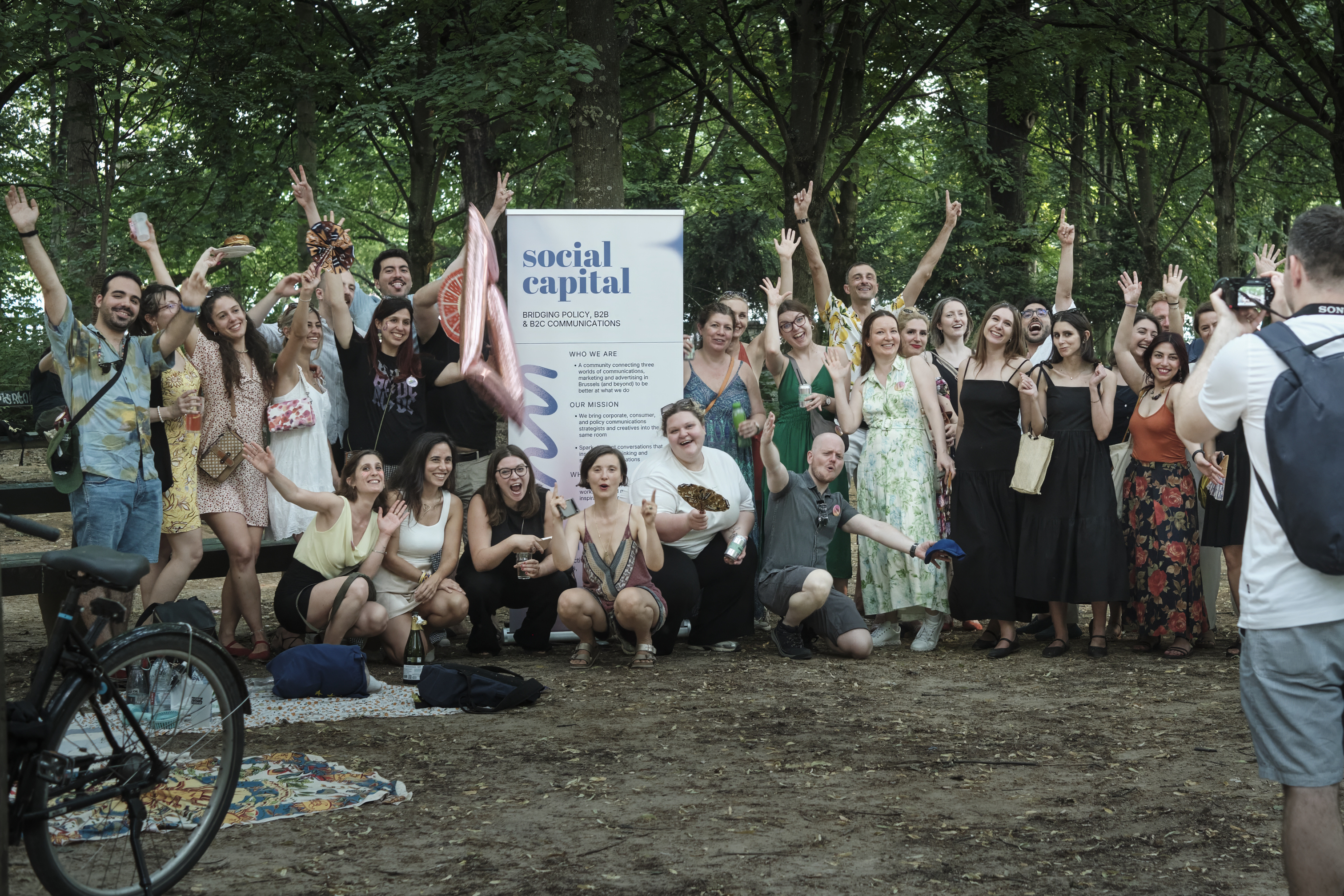
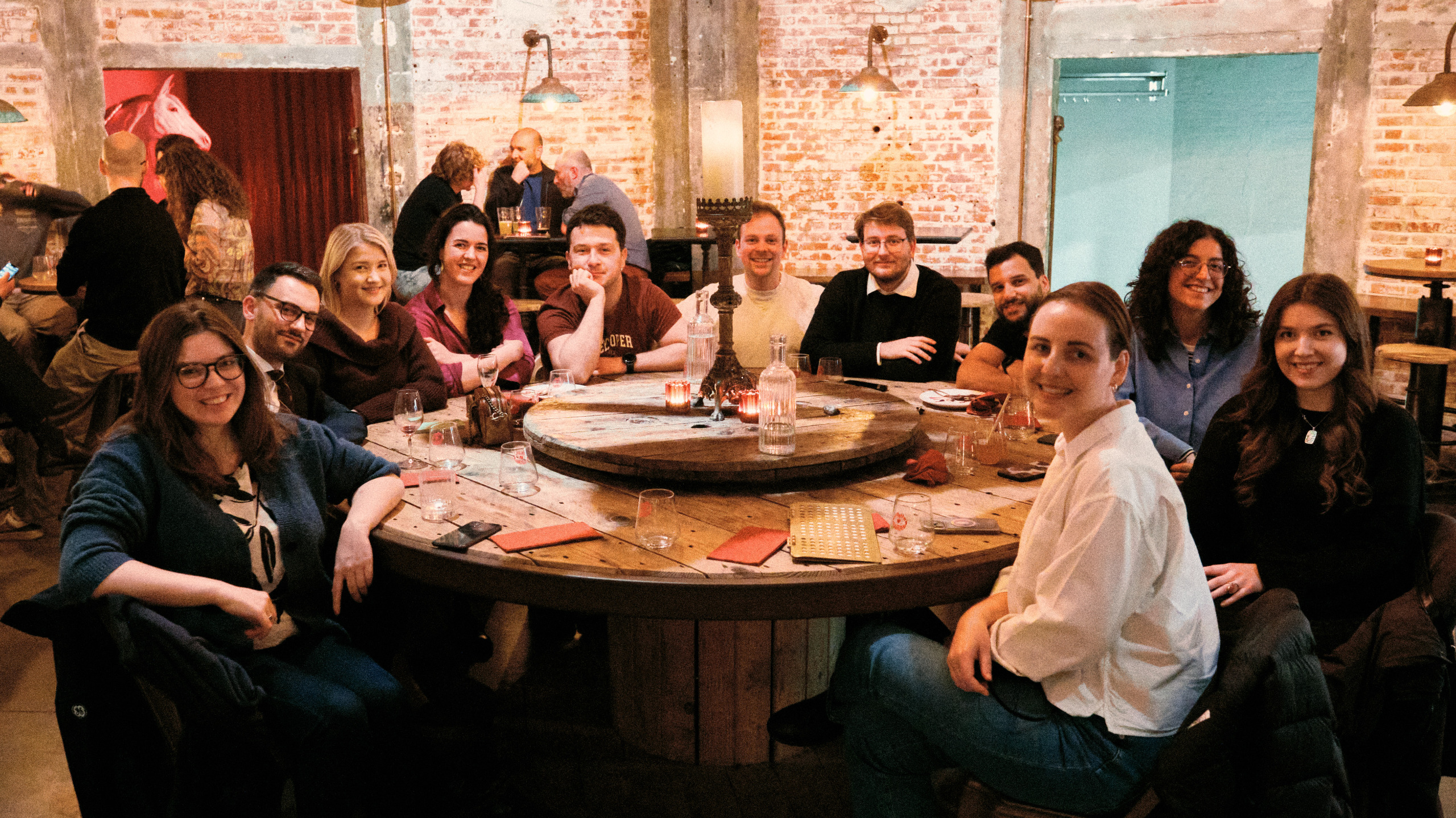
Social Capital hosts events every month. Aperos, workshops, creative walks. Free for members.